Custom Molybdenum Crucibles for High-Temperature Industrial
Overview
Molybdenum crucibles (Mo crucibles) are high-grade refractory containers used in extremely hot industrial applications. Their melting temperature is 2610 degrees Celsius, and their working temperatures range from 1100 to 1800 degrees Celsius. Mo crucibles consist of Mo powder with a purity of at least 99.95% and a density of at least 9.8g/cm³, thus providing complete protection against contamination in vacuum or inert environments. Our Mo crucibles are available in both sintered and machined forms and can be used for sapphire crystal growth, rare earth metals smelting, and PVD evaporation processes.
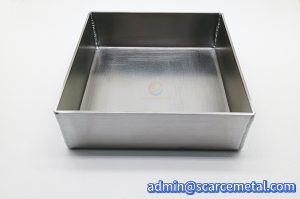
Key Properties of Molybdenum (Mo) Material
Outstanding performance in high heat:
Molybdenum has a very high melting point of 2610-2630°C and maintains good mechanical strength at temperatures up to 1600°C without softening or deforming. In normal industrial operations, molybdenum can work at temperatures of approximately 1100-1800°C, but in some specific environments (e.g., sapphire single-crystal growth furnaces) the application temperature may exceed 2000°C.
Outstanding resistance to mechanical loads and thermal shocks at high temperatures.
The low thermal expansion coefficient (4.8 × 10⁻⁶/°C), combined with the high thermal conductivity (138 W/m·K), reduces thermal stresses associated with sudden temperature changes, which prevents the crucible from cracking and steers heat evenly.
Exceptional Machinability and Molding Abilities
Molybdenum is highly machinable, which means it can make high-precision crucibles of small size by the process of turning. Moreover, methods such as spinning and sintering can enable the manufacture of large-sized crucibles that have thin walls or complex shapes to satisfy the exact specifications of different industrial furnaces.
A commendable level of chemical stability
They can resist corrosion in a vacuum or inert gaseous atmosphere. They can even withstand attacks by many molten metals as well as nonmetals and corrosive oxidizing gases. They also oxidize significantly slower than any other type of container made of ordinary metals while in a reductive gas atmosphere.
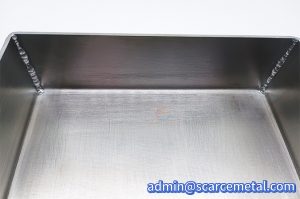
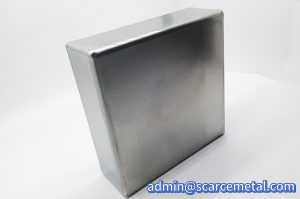
Types of Mo Crucibles We Offer
We manufacture molybdenum crucibles using different fabrication methods to fit various high-temperature processes, vacuum furnace environments, and custom dimensional requirements. Each variant delivers distinct material properties to match your budget, size, and service life goals.
| Crucible Type | Manufacturing Technology | Core Performance | Application Scenarios |
| Sintered Molybdenum Crucibles | Powder metallurgy sintering | Cost-effective, supports large sizes, stable structure | Vacuum furnace sintering, rare earth smelting, general high-temperature melting |
| Forged & Machined Molybdenum Crucibles | High-temperature forging + CNC machining | Full density, crack-free, excellent thermal shock resistance, longer service life | Sapphire crystal growth, high-purity material smelting, frequent thermal cycling |
| Spinning & Welded Molybdenum Crucibles | Spin forming + precision TIG welding | Thin-wall & large-diameter capability, custom non-standard shapes | Vacuum evaporation coating, lab melting, special furnace assemblies |
Standard Specifications and Custom Sizes
| Material |
Mo1, TZM Alloy, Mo-la, Mo-w |
| Dimension |
OD: 20 mm – 500 mm; Height: 30 mm – 600 mm Wall thickness: 1.0 mm – 15 mm Custom ID, depth, and contour drawings accepted |
| Density |
Sintered: ≥9.8 g/cm³; Forged: ≥10.1 g/cm³ |
| Melting Point |
2620 °C |
|
Thermal Expansion Coefficient |
~5.3 ×10⁻⁶ /°C (at 1000°C) |
| MOQ |
1PC |
|
Standard |
ASTM B386/B387 |
|
Lead Time |
25-30 days |
|
Certificate |
ISO 9001 |
Common Applications
1. Sapphire Crystal Growth Furnaces
Molybdenum crucibles serve as the indispensable core containers in Sapphire Crystal Growth Furnaces (e.g., Kyropoulos method and Czochralski method). Operating at extreme temperatures exceeding 2000℃, these crucibles hold the aluminum oxide melt. Our high-purity (≥99.95%) and high-density moly ensures zero contamination during the melting process, directly improving the seed crystal success rate, optimizing crystal pulling quality, and preventing the crystal from sticking to the crucible walls.
2. Rare Earth Smelting & Vacuum Metallurgy
In the Rare Earth Smelting and Vacuum Metallurgy sectors, High Purity Mo Crucibles are essential for melting high-melting-point metals and active alloys. Thanks to their excellent chemical stability and corrosion resistance against molten metals in vacuum or inert gas environments, they are widely utilized in vacuum induction melting furnaces. They guarantee the purity of rare earth metals and superalloys by preventing unwanted chemical reactions at high temperatures.
3. Semiconductor and LED Industry
The Semiconductor and LED Industry heavily relies on CNC-machined Mo Crucibles for the production of single-crystal silicon, silicon carbide (SiC), and other advanced semiconductor materials. In processes like CZ (Czochralski) silicon wafer manufacturing, the ultra-low outgassing and precise dimensional tolerance of our crucibles prevent impurity infiltration, ensuring the optimal electrical performance and high yield of silicon wafers and LED substrates.
4. Thermal Spraying & Coating Processes
In Thermal Spraying and advanced Coating Processes, molybdenum alloy crucibles are frequently used as evaporation boats or crucibles in PVD (Physical Vapor Deposition) and electron beam evaporation systems. Their superior thermal conductivity and resistance to thermal shock allow them to withstand the intense heat required to vaporize optical and metallic coating materials. This ensures uniform film deposition for AR (anti-reflective) coatings, laser optics, and vacuum metallized films without crucible degradation.
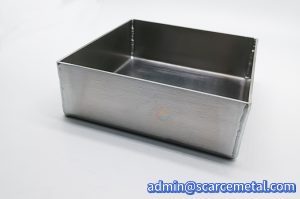
Why Choose US
-
Strict Quality Control & Non-Destructive Testing
Quality is the foundation of our manufacturing process. To guarantee the structural integrity of our molybdenum crucibles, we employ rigorous non-destructive testing protocols, including Ultrasonic Testing (UT), for every batch. This ensures our products are completely free of internal cracks and defects, providing you with reliable performance and peace of mind during high-temperature operations.
-
Advanced Production Equipment & Technology
We utilize advanced sintering furnaces and high-precision CNC machines to produce crucibles that meet exacting dimensional tolerances and surface finish requirements. This technological edge allows us to consistently deliver high-density, high-purity molybdenum crucibles tailored to your specific industrial applications.
-
Global Shipping & Secure Packaging
To protect your investment, all our crucibles are packed using specialized, shock-absorbent materials and secure, reinforced packaging designed specifically for international freight. This ensures that your order arrives safely at your facility, anywhere in the world, ready for immediate deployment.
FAQ
Q1: What are the main applications of moly crucibles?
A: Moly crucibles are core high-temperature containers widely used in sapphire crystal growth furnaces, vacuum evaporation coating systems, rare earth smelting,g and high-temperature metallurgy industries, suitable for long-term high-temperature material melting and sintering processes.
Q2: What is the maximum working temperature of pure molybdenum melting pots?
A: Pure molybdenum melting pots have a melting point of 2620℃, with a stable long-term working temperature range of 1100℃ to 1800℃. They can withstand ultra-high-temperature environments of vacuum furnaces and industrial high-temperature furnaces without deformation.
Q3: What is the difference between sintered molybdenum sintering vessels and spun molybdenum furnace pots?
A: Sintered molybdenum sintering vessels have thick walls, high structural stability, and strong pressure resistance, ideal for large-scale smelting; spun molybdenum furnace pots are integrally formed with thin walls, excellent high-temperature creep resistance, perfect for precision vacuum coating and crystal growth experiments.
Q4: What alloy materials are used for high-performance moly high-temperature crucibles?
A: Besides pure molybdenum, mainstream high-search alloy models include Mo-La molybdenum lanthanum alloy and TZM alloy. These materials effectively improve high-temperature oxidation resistance and service life for extreme working conditions.
Q5: Are pure molybdenum melting crucibles RoHS and REACH compliant?
A: Qualified industrial pure molybdenum melting crucibles fully meet RoHS and REACH environmental certification standards, with low impurity content, no harmful substances, and compliance with European and American industrial import and export specifications.
Q6: How to maintain vacuum furnace molybdenum furnace pots to extend service life?
A: It is recommended to inspect the vacuum furnace molybdenum furnace pots every 50-100 working hours. Avoid rapid temperature rises and falls, clean surface contamination regularly, and repthemce it in time if cracks or deformation occur to ensure high-temperature working stability.