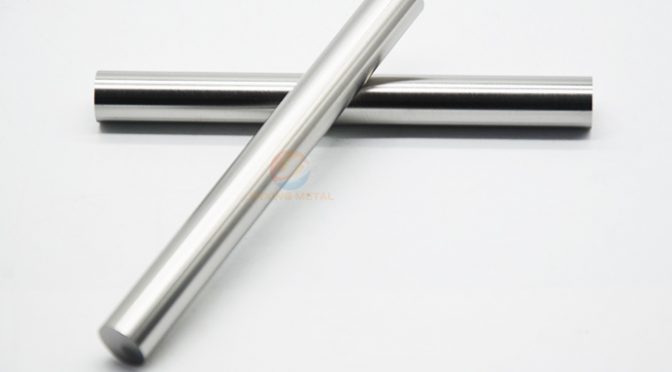
Cylindrical Molybdenum Crucible
Overview
Cylindrical Molybdenum Crucible is a high-temperature resistant and corrosion-resistant container made of high-purity molybdenum and molybdenum alloys. It is widely used in single crystal growth, metallurgical smelting, vacuum coating, and the nuclear industry, significantly improving crystal quality and service life. We offer sintered, forged, and welded versions; lids are optional, and custom production based on drawings is also available. For pricing and product details, please contact us via email or WhatsApp.
Molybdenum Crucible Features
- Exceptional high-temperature resistance, with a typical operating temperature range between 1100°C and 2400°C. It withstands high-temperature smelting, casting, and similar processes without softening, deformation, or creep.
- Purity typically exceeds 99.95%. Its low vapor pressure at elevated temperatures minimizes volatilization, effectively preventing impurities from contaminating molten materials and ensuring the purity of experiments or products.
- Its thermal expansion coefficient is minimal, making it highly resistant to thermal-stress-induced fractures during rapid temperature changes (e.g., rapid heating/cooling) and exhibiting exceptional dimensional stability.
- Molybdenum demonstrates strong corrosion resistance against most molten metals and chemicals, maintaining stable chemical properties.
- Molybdenum exhibits excellent thermal conductivity, enabling rapid, uniform heat transfer to internal materials and thereby enhancing smelting efficiency.
- It possesses high hardness, a smooth surface finish, and superior wear resistance, capable of withstanding mechanical impact and abrasion to a certain degree, resulting in a relatively long service life.
Cylindrical Molybdenum Crucible Specification
| Grade |
Mo1, TZM, MoLa |
| Purity |
≥99.95% |
| Density |
9.6-10.2 g/cm³ |
| Diameter |
10-500mm |
| Height |
10-600mm |
| Surface |
Polishing |
| Standard |
ASTM 360/386/387 |
| Delivery Time |
20-30 days |
| MOQ |
2 PCS |
| Certification |
ISO 9001 |
Molybdenum Crucibles Application
1. Metallurgy and Rare Earth Industry (Core Field)
- Rare Earth Smelting: Extremely high temperatures are required in the extraction, reduction, and refining of rare earth elements. Due to its stable chemical properties, it effectively prevents impurities from entering, ensuring the high purity of rare earth products, making it an indispensable container in rare earth smelting.
- High Melting Point Metal Processing: Used in the metallurgical industry for processing high-melting-point metals such as titanium, zirconium, and tantalum, as well as for the smelting and refining of high-performance alloys, providing a reliable high-temperature environment for the processing of special metals.
2. Optics and Crystal Growth (High-End Manufacturing)
- Sapphire Single Crystal Growth: Widely used in sapphire single crystal growth furnaces. High-purity, high-density molybdenum crucibles play a crucial role in seeding success rate, crystal pulling quality control, and the crystal removal process.
- Single Crystal Silicon Production: As the foundation of the electronics industry, the preparation of single crystal silicon requires extremely high temperatures and purity. Using this container effectively prevents the introduction of impurities, improving crystal quality.
3. Semiconductor and Electronics Industry (Precision Machining)
- Wafer Coating: Used as an evaporation source in electron beam deposition processes for wafer metallization, electrode material evaporation, etc. Its low vapor pressure and stable chemical properties ensure thin film quality.
- Display and Photovoltaics: Used to manufacture high-purity silicon materials required for solar panels, as well as metal reflective layers for optical devices and conductive film layers for display panels.
4. New Energy and Aerospace
- Solar Industry: Used to smelt high-purity silicon to improve the conversion efficiency of solar cells.
- Aerospace: Used to prepare high-performance alloys required in this field, meeting the adaptability requirements of special materials to extreme environments.
Processing
① Select high-purity molybdenum powder, remove impurities, add a small amount of binder as required, and achieve uniform mixing through powder blending equipment to enhance forming properties.
② Employ cold isostatic pressing to form crucible blanks, ensuring uniform density of the blank body, followed by degreasing treatment.
③ High-temperature vacuum sintering causes molybdenum powder particles to diffuse and fuse, forming a dense molybdenum blank.
④ The sintered molybdenum blank undergoes high-temperature forging or spin forming to enhance material density and toughness while eliminating internal voids.
⑤ Precision machining is performed via CNC turning, milling, and polishing to control inner/outer diameter tolerances and ensure compliance with customer assembly and usage requirements.
⑥ Surface finishing includes sandblasting, polishing, or acid washing to remove machining marks and oxide layers, improving surface finish.
⑦ Comprehensive quality inspection, including density testing, dimensional inspection, non-destructive testing (ultrasonic, X-ray), and purity analysis, ensures product compliance before shipment.
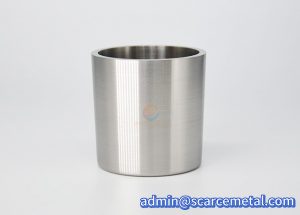
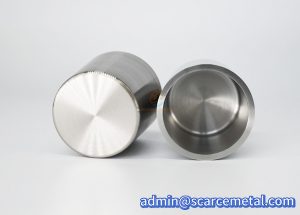
Cylindrical Molybdenum Crucible Pictures

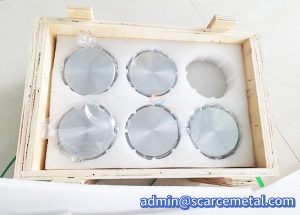
Packing