Palladium Silver Foil
Overview
Palladium Silver Foil combines the high catalytic activity and corrosion resistance of palladium with the high conductivity of silver. Its core applications include semiconductor interconnects, fuel cell catalyst layers, electrodes in nuclear medicine equipment, and conductive components in spacecraft. Suitable for harsh environments such as high temperatures and radiation resistance, it is a key material in high-end manufacturing. Our company, with its stable product quality, precise customization capabilities, and comprehensive service system, has exported its products to more than 50 countries and regions worldwide. Please feel free to contact us via email or WhatsApp if you have any needs.
Palladium Features
- High purity and good ductility, palladium is manufactured through a vacuum electron beam melting-precision rolling-electrolytic polishing process, and can be processed into ultra-thin foils or micron-sized filaments.
- It exhibits strong resistance to acids, alkalis, halogens, and high-temperature environments, and does not easily oxidize or discolor at room temperature, forming an oxide film only slowly above 800℃.
- It possesses excellent catalytic performance for hydrogen adsorption and dissociation, and the hydrogenation of organic matter, and can rapidly adsorb and permeate hydrogen at room temperature.
- It has excellent electrical properties, with high conductivity and low resistivity, making it suitable for high-frequency electronic component applications.
- Compared to precious metals such as platinum and gold, palladium maintains high performance while being less expensive and recyclable.
Palladium Alloy Foil Dimension
| Grade |
PdAg30/PdAg40 |
| Thickness |
0.025-0.5mm |
| Size |
10×10mm、25×25mm、50×50mm、100×100mm |
| Density |
11.5-12.5 g/cm³ |
| Melting Point |
1250-1400°C |
| Hardness |
100-250 HV |
| Delivery Time |
20-30 days |
| Certification |
ISO 9001 |
Palladium/Silver Foil Application
1. Electronic Semiconductor Field
Palladium Silver Foil is primarily used in semiconductor chip interconnect materials (such as bonding foils and lead frames), electrodes for RF devices (filters, oscillators), and flexible electronic circuit substrates. It is particularly suited for high-temperature, high-reliability applications like automotive electronics and 5G base stations, ensuring efficient signal transmission while significantly reducing electronic device power consumption.
2. Catalysis and Chemical Engineering
Widely employed as catalyst carriers in chemical reactions like hydrogen fuel cells, hydrogenation, and dehydrogenation, as well as in automotive exhaust purification catalysts for premium vehicles. Its ability to form porous structures substantially enhances catalytic efficiency in harsh environments.
3. Aerospace Sector
In extreme aerospace conditions, palladium-silver foil primarily serves as a lining for spacecraft attitude control engine combustion chambers, conductive components in satellite communication equipment, and high-temperature sensor probes. It effectively extends device lifespan, ensuring reliable operation of spacecraft and satellite equipment in complex space environments.
4. Medical and Biotech Applications
Owing to its excellent biocompatibility and non-toxicity, palladium-silver foil is employed in dental implants and bone repair scaffolds. It resists bodily fluid corrosion while promoting tissue adhesion. It also serves as electrodes and connectors for nuclear medicine imaging equipment like PET-CT and SPECT, as well as electrodes for medical sensors such as radiation dosimeters, meeting the demands for miniaturized and precision-engineered medical instrument assemblies.
5. High-End Jewelry
Palladium-silver alloys (30–50% silver content) combine palladium's silvery luster with silver's malleability. They are used to craft wear-resistant rings and necklaces, offering superior hardness compared to pure palladium.
Processing
① Raw materials are selected from high-purity palladium and silver powders of 99.99% or higher. The Pd-Ag ratio is precisely adjusted according to the application scenario. Trace amounts of Au and Cu can be added to improve corrosion resistance or reduce contact resistance.
② A vacuum induction melting furnace is used to ensure uniform component distribution, followed by ingot casting to obtain fine-grained ingots, ensuring the absence of defects such as shrinkage cavities and cracks.
③ Multiple hot forging and cold rolling processes are performed, gradually thinning the sheet from 5-10mm to the target thickness, with vacuum annealing in between to eliminate work hardening and restore material plasticity.
④ Ultrasonic cleaning and chemical polishing are performed to remove the surface oxide layer and rolling scratches, improving surface smoothness.
⑤ A precision slitting machine is used to cut the material to standard sizes or customized specifications according to customer requirements, ensuring burr-free edges.
⑥ From raw materials to finished products, 12 inspection points are conducted, including chemical composition analysis, mechanical property testing, dimensional accuracy, and appearance inspection, conforming to a series of international standards such as ISO 9001.
Pictures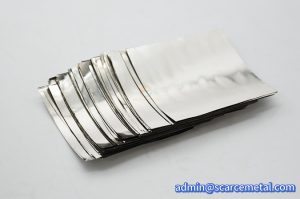
Packing