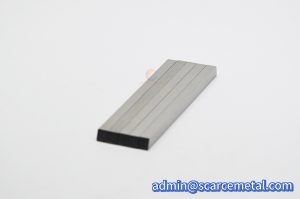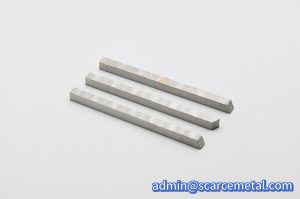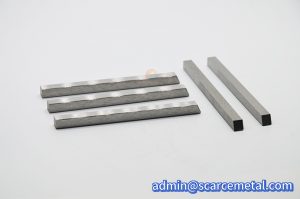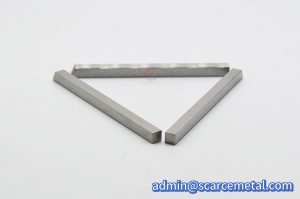
Polished Tungsten Welding Electrode
Overview
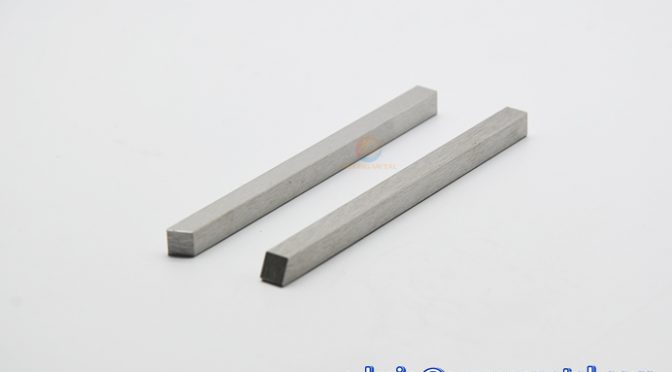
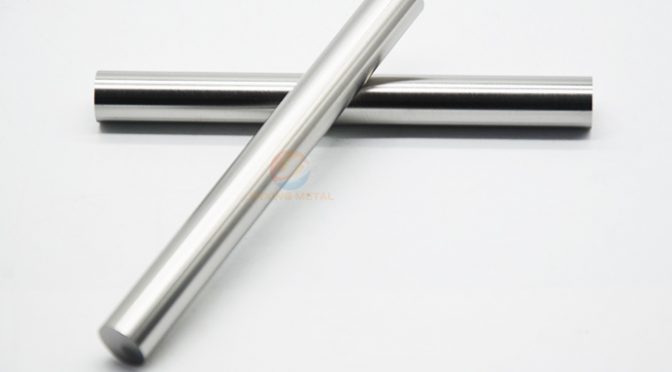
Polished Tungsten Welding Electrode is a precision welding electrode made with high-purity tungsten as the base material and added with rare earth oxides such as cerium, lanthanum, and thorium. After precision grinding, it features a smooth surface, accurate dimensions, excellent conductivity, and high-temperature resistance, and is characterized by easy arc ignition, stable arc, resistance to burn-off, and long lifespan. It is widely used in precision welding applications such as TIG welding, plasma welding, and micro-beam plasma welding, and is a key consumable in aerospace, automotive manufacturing, nuclear power, electronics, medical, stainless steel, and non-ferrous metal welding. If you are interested in this product, please feel free to contact us via email. We can provide you with high-level customized processing and a highly competitive quote.
Tungsten Electrode Advantages
- It has a high melting point and can maintain structural stability in high-temperature environments, making it particularly suitable for high-temperature welding and melting processes.
- Good electrical and thermal conductivity, good arcing performance, can effectively conduct welding current, and improve welding quality.
- High hardness, extremely strong wear resistance, long service life, significantly reduces replacement frequency and maintenance costs.
- The smooth surface and small dimensional tolerances make it particularly suitable for precision welding and microelectronics manufacturing.
- By selecting different diameters and end shapes, it can be adapted to different current ranges from low to high currents.
Polished Tungsten Welding Electrode Dimension
| Grade | |
| W Purity | ≥99.95% |
| Density | 19.3 g/cm³ |
| Diameter | 1.0-50mm |
| Length | 10-330mm |
| Tolerance | ±(0.03-0.1)mm |
| Conductivity | ≥30% IACS |
| Surface | Polished |
| Standard | ANSI/AWS/GB |
| Certification | ISO 9001 |
Tungsten Electrode Rod Application
1. Welding field
Polished Tungsten Welding Electrode is the core component of TIG welding, suitable for AC welding for welding of metals such as aluminum and magnesium, or low current DC welding for carbon steel, stainless steel, nickel alloy, etc.
2. Aerospace
Precision welding of lightweight, high-temperature resistant materials such as titanium alloys, aluminum alloys, and superalloys. Such as welding of aircraft fuselage, wings, engine turbine blades, combustion chambers, and spacecraft structural parts.
3. Automobile manufacturing industry
Stainless steel and aluminum alloy welding of the body, chassis, engine, and exhaust system.
4. Electronics and semiconductors
Electrodes and seals of electron tubes, microwave tubes, and X-ray tubes are welded.
Microbeam plasma soldering or precision TIG soldering of microelectronic lead frames, sensors, connectors, and relays.
5. Petrochemical
Welding of high-pressure pipelines, pressure vessels, and corrosion-resistant alloy equipment.
6. Medical devices
Welding of surgical instruments, such as stainless steel and titanium scalpels.
Precision welding of implants such as orthopedic steel plates, artificial joints, and cardiovascular stents.
Welding of precision components for medical imaging and radiotherapy equipment.
7. Other industries
Wear alloys and thick plates for construction machinery, mining machinery, and ships are welded.
Process
① Using high-purity tungsten powder as a base, rare earth oxides such as cerium, lanthanum, and thorium are added according to the formula and mixed uniformly.
② The mixed powder is pressed into dense tungsten electrode billets using a cold isostatic pressing process.
③ The billets are sintered in a high-temperature furnace to densify and strengthen them, achieving the required strength and conductivity.
④ The sintered billets are then forged or rolled to further improve density, uniformity, and mechanical properties.
⑤ The billets are precision-drawn to a specified diameter, ensuring dimensional accuracy and straightness, and then cut and end-faced.
⑥ Precision grinding is used to achieve a smooth surface, accurate dimensions, no oxide layer, and no burrs.
Pictures