Zirconium Target
Overview
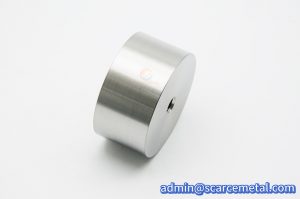
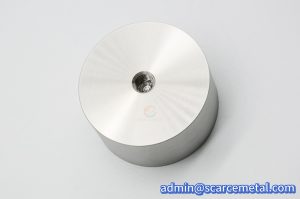
Zirconium Target is a circular sputtering target made of high-purity zirconium metal, which deposits high-performance thin films in semiconductors, optical coatings, nuclear reactors, medical devices and aerospace through magnetron sputtering technology with its high melting point, corrosion resistance, low neutron absorption cross-section, and excellent thermal stability, and is used to manufacture key components such as gate electrodes, protective coatings, and fuel cladding to improve device performance and reliability.
Our company has more than 20 years of professional experience in the non-ferrous metal industry, and can meet the different customized requirements of customers with high quality, and provide a one-stop service to save time and cost for customers. If you need it, please feel free to contact us by email.
Zirconium Characteristics
- High melting point of 1852°C, second only to refractory metals such as tungsten and molybdenum, making it structurally stable in high-temperature process environments and suitable for high-temperature sputtering processes. This characteristic enables zirconium targets to withstand high-energy ion bombardment during magnetron sputtering to ensure the stability of thin film deposition.
- With a density of approximately 6.49 g/cm³, zirconium is between titanium and iron, offering both strength and lightweight. Its Brinell hardness is approximately 120-150 HB, and can be increased to over 200 HB after work hardening, ensuring that the target is not prone to cracking or deformation under high-speed rotation and thermal stress.
- The thermal conductivity is about 6 W/m·K, which helps to effectively dissipate heat during the sputtering process, prevent local overheating from causing the surface of the target to peel off, and significantly improve the service life and film formation quality of the target.
- Typically, with a purity of over 99.9%, it guarantees minimal impurity doping during film deposition, improving the quality of the final product.
- Excellent chemical stability. Zirconium excels in strong acids, alkalis, and molten salts, forming a dense zirconia passivation film on the surface that can quickly repair itself even if damaged.
-
Zirconium has a much lower neutron absorption cross-section than iron (2.5 targets) and nickel (4.5 targets), making it an ideal material for nuclear reactor fuel cladding.
Zirconium Target Dimension
| Grade | Zr702 |
| Diameter | 20-500mm |
| Thickness | 3-28mm |
| Purity | ≥99.9%(4N) |
| Density | 6.5 g/cm³ |
| Hardness | 120-150 HV |
| Surface Finish | Ra≤0.4μm |
| MOQ | 1PC |
| Delivery Time | 25-30 days |
| Certification | ISO 9001 |
Application
1. Semiconductors and integrated circuits
The zirconium target is used to deposit copper interconnect barrier layers to prevent copper diffusion and improve device stability.
2. Display and optoelectronics
LCD/OLED: Deposition of transparent conductive film, anode buffer layer, insulation layer.
Zirconium Sputter Target can sputter anti-reflection films/high reflection films in optical instruments for lenses, filters, and AR glasses.
3. Tools and wear-resistant coatings
Reactive sputtering ZrN (gold) and ZrCN are used to improve the hardness, wear resistance, and corrosion resistance of tools or molds.
4. New energy and energy storage
Solid-state batteries: deposit LLZO solid-state electrolyte films.
Fuel cell / PEM electrolyzer: Preparation of corrosion-resistant, oxidation-protective layers.
5. Nuclear industry
The surface of the nuclear fuel assembly is an anti-corrosion and anti-neutron absorption coating.
6. Medical and biological
Orthopedic/dental implants: deposited ZrO₂ gradient membrane to strengthen osseointegration, corrosion resistance, and wear resistance.
7. Decoration with high-end hardware
Reactive sputtering ZrN imitation gold coating, used in watches, bathrooms, hardware, stable color, and wear-resistant.
8. Aerospace
High-temperature components and structural parts: deposited oxidation-resistant, corrosion-resistant, and thermal barrier coatings.
Process
(1) Raw material purification: Vacuum melting or electron beam melting is used to make high-purity dense zirconium ingots.
(2) Forging and opening billets: high-temperature forging breaks the casting structure, eliminating internal looseness and improving the density of the billet.
(3) Rolling forming: The billet is processed into a round cake blank close to the size of the finished product by hot rolling or cold rolling.
(4) Heat treatment: vacuum annealing eliminates processing stress and regulates grain size and microstructure uniformity.
(5) Precision machining: turning, grinding, and polishing to make zirconium round targets that meet the size and finish requirements.
(6) Cleaning treatment: Chemical cleaning and pure water rinsing to remove oil stains, oxide layer, and impurities before drying.
(7) Finished product testing: vacuum packaging after passing the inspection of size, flatness, surface quality, internal defects, etc.
Pictures