Custom Carbide Molds
Overview
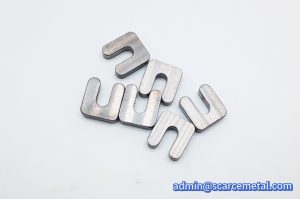
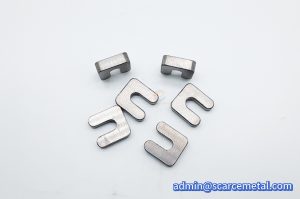
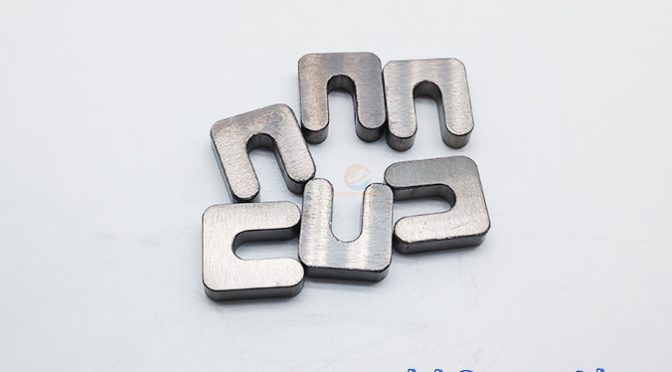
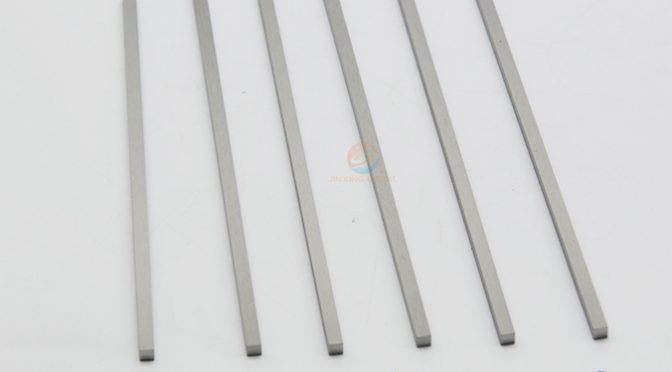
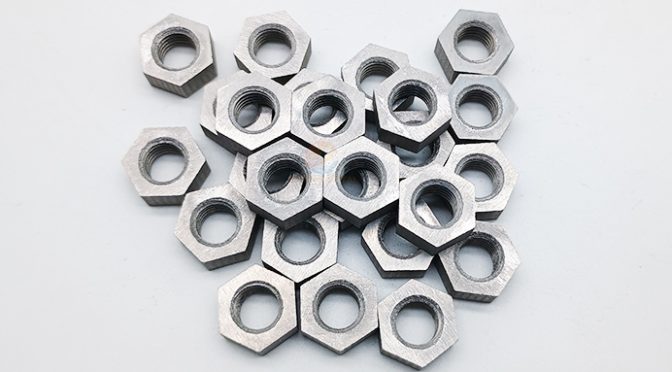
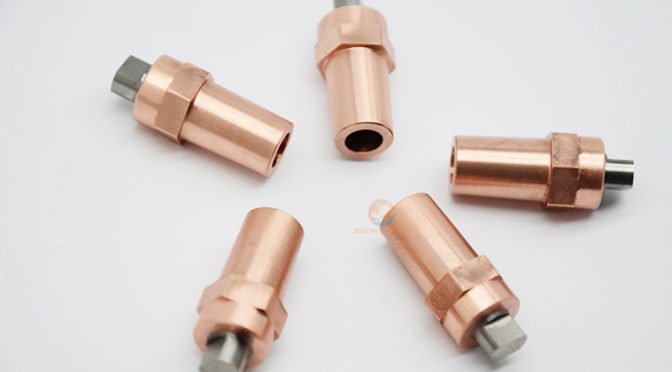
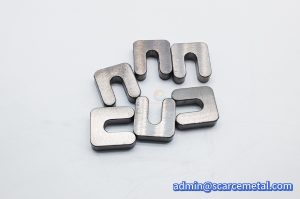
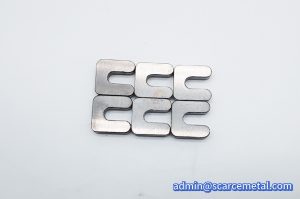
Custom carbide molds are a type of shaped wire-drawing die. Utilizing hard alloys—such as tungsten carbide—as the core material, they are precision-machined to feature a specific U-shaped internal profile. They are primarily used to draw metal wires (such as copper, aluminum, or steel) into non-circular cross-sections. As the wire is pulled through the U-shaped aperture, it undergoes plastic deformation, ultimately resulting in a product with a U-shaped cross-section that matches the mold's internal geometry. These molds are widely used in the production of components such as electronic component leads, radiator fins, decorative strips, and structural clips, where high dimensional accuracy and superior surface finish are required.
Key Features & Advantages
-
High Hardness and Wear Resistance
The WC matrix offers high hardness and resistance to frictional wear from metal wire, making it suitable for high-volume wire drawing production; the cobalt (Co) binder content is adjustable to match the hardness of various wire materials.
-
Deformation Resistance and Dimensional Stability
It exhibits minimal thermal deformation under the frictional heat generated during drawing; the aspect ratio and corner radii of shaped profiles remain stable over long periods, ensuring consistent cross-sections in the finished wire.
-
Excellent Corrosion and Heat Resistance
It withstands exposure to wire-drawing lubricants and cooling media, resists softening and oxidation under high-temperature friction, and is suitable for high-speed wire drawing operations.
-
Supports Various Precision Machining Processes
Sintered cemented carbide blanks can be machined into complex-shaped cavities using EDM (sinking or wire-cut), ultrasonic grinding, and CNC diamond grinding.
-
High Cost-Performance Ratio
Compared to PCD or natural diamond dies, cemented carbide blanks offer lower costs; this advantage is particularly pronounced for complex, large-cross-section shaped holes, where diamond processing is extremely difficult and expensive.
Technical Specifications & Material Grades
| Grade |
WC Content (%) |
Co Content (%) |
Hardness (HRA) |
Tensile Strength (MPa) |
Wear Resistance |
Impact Resistance |
| YG3 | 97 | 3 | 90.5 | 130 | Very High | Low |
| YG6 | 94 | 6 | 89 | 160 | High | Moderate |
| YG8 | 92 | 8 | 87.5 | 180 | High | Good |
| YG11 | 89 | 11 | 86 | 210 | Moderate | Very Good |
| YG15 | 85 | 15 | 84.5 | 230 | Moderate | Excellent |
| Product | U-shaped Carbide Molds |
| Grade | YG6 |
| Density | 14.6~15.0 g/cm³ |
| Surface | Polished, Sintered |
| Size | According to drawing |
| Dimension |
Dia:0.15mm-55mm;L:20mm-90mm;Thick:4mm-50mm |
| Qty | 50pcs |
| Lead Time | 30-35 days |
| Standard | ASTM B760, ASTM B925, |
| Certificate | ISO 9001, EN 10204 3.1 |
Typical Industries & Applications
I. Wire, Cable, and Metal Wire Industry (Core Application)
Tungsten carbide wire guides are primarily used for the continuous drawing and forming of various shaped metal wires—such as square, hexagonal, trapezoidal spring, and flat stainless steel wires—serving industries that produce springs, precision filters, woven wire products, and decorative metal wires. Leveraging high-precision forming capabilities, these guides enable the stable mass production of miniature shaped copper and alloy wires (used in telecommunications and precision instruments) with dimensional tolerances controlled at the micron level.
II. Automotive and New Energy Industries
Tungsten carbide wire drawing dies are utilized for the stretching and stamping of shaped metal components—including car body parts, door frames, engine hoods, and chassis brackets. Compatible with materials such as steel and aluminum alloys, these dies offer high compressive strength and can withstand heavy-duty, high-volume stamping loads.
III. Precision Electronics and Telecommunications Industries
Custom carbide molds are used for the precision machining of shaped components found in electronic connectors, miniature electronic accessories, and electrical fittings. Their characteristics—high-precision forming, low wear, and resistance to deformation—meet the mass production requirements for miniature, precision-shaped electronic parts.
IV. Aerospace and High-End Equipment Industries
Tungsten carbide dies are frequently used to form high-end, precision-shaped components, such as aerospace fasteners, shaped fasteners made of titanium or aluminum alloys, specialized aerospace rivets (via hot forging), and auxiliary shaped parts for aircraft engines. They meet the rigorous precision assembly standards required for high-end equipment.
V. Medical Device Industry
Tungsten carbide molds are primarily used for the cold heading, shaping, and finishing of shaped components for minimally invasive surgical instruments and precision medical metal stents. The resulting parts feature high surface finishes and are free from burrs or deformation, complying with biocompatibility and safety standards for medical components.
VI. Petrochemical and Industrial Mining Equipment Industries
Leveraging the high-temperature resistance, corrosion resistance, and erosion resistance of cemented carbide, these molds are used to form shaped, wear-resistant components for industrial mining and petrochemical equipment. This primarily involves the forming and machining of components such as downhole specially shaped flow restrictors, control valve seats, plungers, and wear-resistant specially shaped bushings.
Customization Capabilities
Manufactured According to Customer Drawings
We specialize in manufacturing according to customer drawings, providing tailored Tungsten Carbide Dies and precision wear parts for global B2B clients. Our engineering team ensures that every custom mold component strictly adheres to your specific design requirements and application scenarios.
High-Precision Tolerance Control
To meet the stringent quality demands of the international market, our advanced manufacturing processes guarantee exceptional dimensional accuracy. We can achieve tight machining tolerances of up to ±0.002mm, ensuring perfect fitment and superior performance in high-stress environments.
Advanced Processing Technologies
Our facility is equipped with state-of-the-art machinery to handle complex geometries and hard materials. Our core processing capabilities include:
- CNC Grinding: For precise outer diameter and inner contour finishing.
- EDM Machining (Electrical Discharge Machining): Ideal for creating intricate U-shaped cavities and deep profiles.
- Diamond Lapping: To achieve ultra-smooth surface roughness and mirror-like finishes for optimal wire drawing.
Supported CAD File Formats
To streamline the quotation and production workflow, we accept a wide range of industry-standard CAD files. Please send your designs in STEP (.stp/.step), DWG, DXF, or PDF formats. If you have native CAD files (such as SLDPRT or IGES), our engineering team can also convert them seamlessly for accurate CNC machining.
FAQ
Q: How do I choose the right tungsten carbide grade for high-wear wire guiding applications?
A: Grade selection depends on the wire material and drawing stress. For non-ferrous metals and medium-stress applications, YG6 is ideal due to its excellent wear resistance. For high-impact, heavy-duty steel wire drawing, grades with higher cobalt content like YG8 or YG15 are recommended for their superior toughness and shock resistance.
Q: Will the carbide wire molds scratch or damage my wire surface during high-speed processing?
A: No. Our dies undergo Diamond Lapping to achieve ultra-smooth, mirror-like surface finishes (Ra 0.025 or better). This precision polishing, combined with optimized die geometry and proper lubrication, prevents friction and ensures your wire surface remains scratch-free and flawless during high-speed processing.
Q: What is the typical lead time for custom tungsten carbide wire drawing dies?
A: The lead time varies based on complexity and order quantity. For standard customized dies, production typically takes 15 to 25 days. If you require urgent delivery or have standard sizes in stock, we can expedite the process to fulfill your needs as quickly as possible.
Q: Do you provide samples?
A: Yes, we support sample testing. We can manufacture custom samples based on your CAD drawings (STEP, DWG, DXF) to help you verify dimensions and performance before committing to a bulk order. Please contact us for sample pricing and lead times.
Q: How do your carbide wire guides handle high thermal shock and impact in high-speed operations?
A: Tungsten carbide naturally possesses high thermal hardness (maintaining strength at 900-1000°C) and excellent thermal conductivity. This allows the molds to rapidly dissipate friction heat generated during high-speed drawing. Additionally, our optimized alloy compositions provide high impact toughness to withstand mechanical shocks, ensuring a long service life without cracking.